
Why We Are Allergic: How a Border Revealed the Root Causes of Sensitization
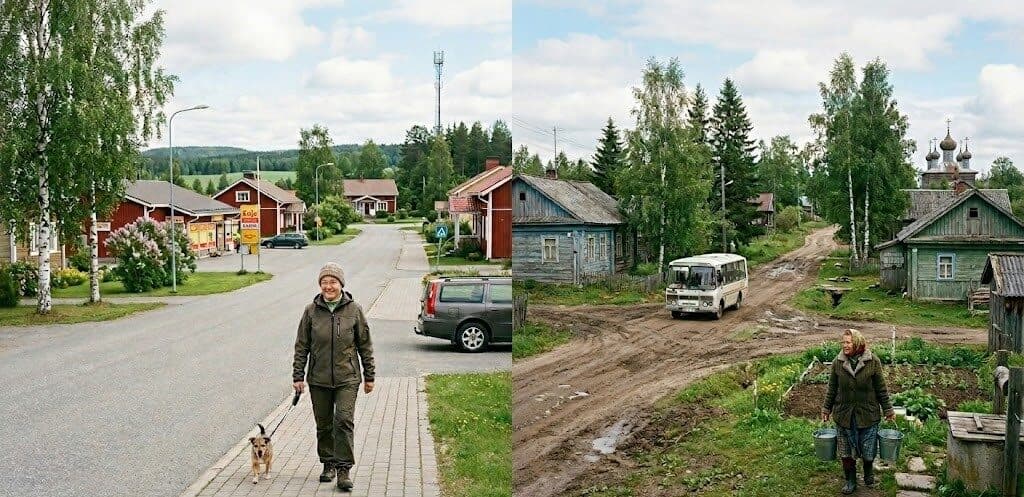
The prevalence of allergies and autoimmune diseases has increased significantly over the last century. An intriguing setup for studying this phenomenon emerged in Finland after World War II when Karelia was divided between Finland and the Soviet Union. These regions share the same climate and a common genetic heritage, yet the lifestyles of their inhabitants diverged sharply. By the late 1990s, these two populations had become a natural laboratory for understanding the allergy epidemic.
In 1998, Tari Haahtela’s research group at Helsinki University Central Hospital launched the Karelian Allergy Study. The primary finding was startling. Allergic diseases were three to ten times more common on the Finnish side of the border. Hay fever was almost nonexistent among schoolchildren in Russian Karelia, and only two percent were sensitized to birch pollen, compared to 27 percent in Finland. A genome-wide analysis ruled out genetic explanations. Notably, among those born in the 1940s, sensitization rates were equally low in both countries. The gap has grown generation by generation, mirroring Finland’s post-war urbanization.
The Microbial Explanation
If the cause was not in the genes, where was it? The microbial environments these two populations lived in were extremely distinct. The Russian population lived in a very rural environment leaning heavily to self-sufficiency in food production, whereas Finnish in a more urbanized communities.
The research team discovered that the drinking water and house dust in Russian Karelia contained significantly more diverse microbial communities. Russian youth also possessed a richer microbiota on their skin and in their nasal passages, where the soil bacterium Acinetobacter was particularly abundant. On the Finnish side, higher levels of Acinetobacter distinguished healthy individuals from those with atopy. Laboratory tests confirmed this by showing that Acinetobacter received through the skin protected against atopic sensitization and lung inflammation.
Studies of gene expression deepened this understanding further. Hundreds of differently expressed genes were found in peripheral blood mononuclear cells, and innate immunity pathways were dampened in Russians compared to Finns. Researchers also identified epigenetic differences, suggesting that microbial exposure shapes immune regulation across multiple biological levels.
The Biodiversity Hypothesis
Based on these findings, researchers formulated the Biodiversity Hypothesis in 2011. The World Allergy Organization adopted it as an official position two years later.
The core of the hypothesis is that humans depend on two nested layers of diversity. The outer environmental layer includes soil, water, plants, and animals. The inner microbial layer comprises the microbiota of the gut, skin, and airways.
The external environment constantly feeds and maintains the internal microbiota. When environmental biodiversity declines due to urbanization and the depletion of microbes in living spaces, the human microbiome also becomes impoverished. Consequently, the balance of immune regulation weakens, leading to an increased risk of chronic inflammatory diseases.
This hypothesis applies not only to allergies but also to asthma, inflammatory bowel diseases, type 1 diabetes, obesity, and potentially even depression. While scientific evidence remains largely observational and ecological, supported by animal models and small human trials, large-scale experimental studies are still in their early stages. However, the consistency of the phenomenon across different populations and the way changes align with generational shifts make the overall picture highly convincing.
From Research to Practice
The National Allergy Programme (2008–2018), built directly on the Karelian studies, shifted the entire paradigm from avoiding allergens to improving tolerance. Doctors were trained to avoid unnecessary medication for mild symptoms and to encourage the introduction of new foods at an early age. The message to the public was clear: immunity should be strengthened through contact with nature, a diverse diet, and physical activity.
A ten-year follow-up of national health registries revealed significant results. The prevalence of allergies and asthma among conscripts stabilized. Hospital days required for asthma decreased by half. The number of special diets in daycares was cut in two. Occupational allergies fell by 45 percent. Annual costs dropped by an estimated 200 million euros.
Although this was a practical intervention without a randomized control group, the direction of progress was consistent across all independent data sources. Still, the work is only halfway done. Recommendations based on research have yet to change the daily lives of most people.
The Key Lesson
The Karelian Allergy Study changes our understanding of immune-mediated diseases. The immune system is an actively adaptive system that requires exposure to microbes from a diverse environment to develop and maintain its tolerance. With Finland’s rapid modernization, we did not just lose a rural way of life; we lost a vital biological collaboration with the microbial world that our immune systems have evolved to rely upon.
The practical conclusion is that microbial exposure plays a fundamental role in the development of chronic diseases, and we really should do something about our exposure for the sake of our health.